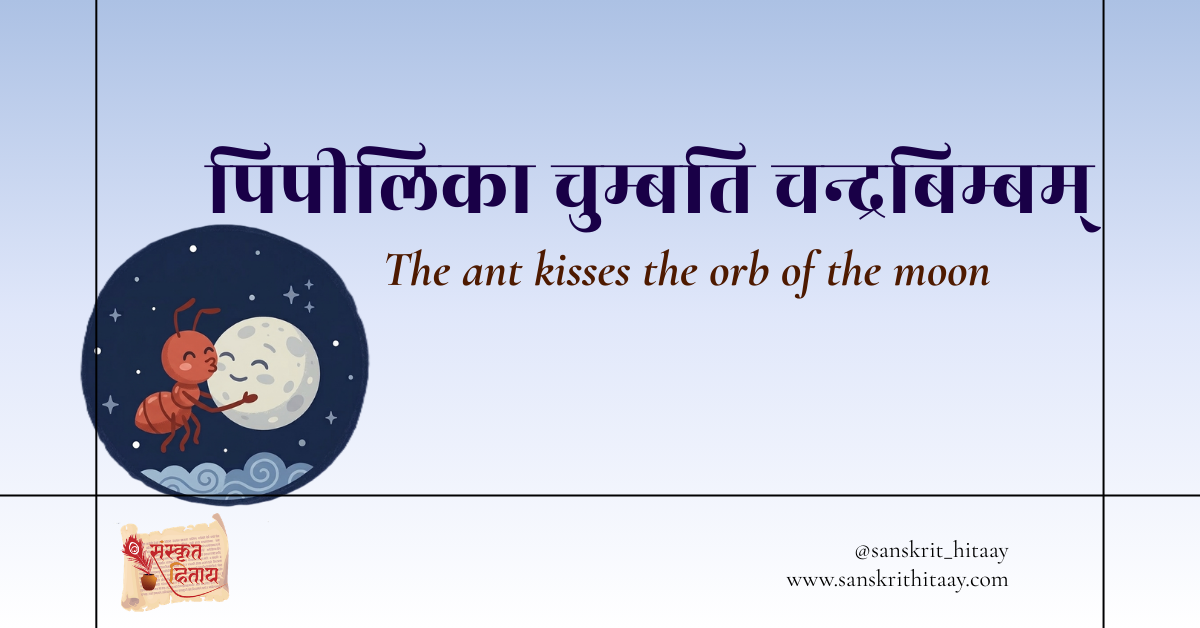
पिपीलिका चुम्बति चन्द्रबिम्बम् : The ant kisses the orb of moon (compilation)
A compilation of classic Sanskrit samasyāpūrti - पिपीलिका चुम्बति चन्द्रबिम्बम्
Viśākhadatta transformed Sanskrit drama by making politics—not romance—its driving force. Writing from inside the machinery of power, he staged espionage, ministerial strategy, and moral conflict as high art. In Mudrārākṣasa, intrigue itself becomes aesthetic experience, revealing a bold insight: the science of statecraft (artha) can generate rasa as powerfully as love or heroism.
Beyond Kālidāsa and the celebrated mahākavis lies a powerful, often forgotten current of Sanskrit literary genius — the voices of women who mastered the same demanding art and reshaped it in their own way. Meet the audacious Vijjikā who challenged Daṇḍin himself, the psychologically brilliant Śīlā Bhaṭṭārikā who captured the inner tremors of love-in-separation, and Madhuravāṇī, the scholar-poet who transformed an epic across languages in a royal court. Not footnotes. Not exceptions. Masters of kāvya. Discover how these poetesses claimed authority, technique, and imagination at the very heart of the Sanskrit tradition.
This blog outlines a major shift in Sanskrit literature (c. 3rd–5th century CE), when drama and poetry moved beyond mythological themes to depict contemporary urban society. Associated with Śūdraka and works like Mṛcchakaṭika, the period saw realist theatre, social satire, expanded use of Prākrits, and the rise of the refined vaidarbhī style, shaping classical kāvya’s mature form.
When I browsed the web for Sanskrit poetesses—blogs and consolidated information intended for lay readers—the results were scarce and sparse. I repeatedly encountered the same few names: Śīlābhaṭṭārikā, Vijjikā, and…
Various versions of the famous phrase "kriyāsiddhi sattve vasati mahatāṃ nopakaraṇe".
Āścaryacūḍāmaṇi stands at the crossroads of philosophy and performance—where Advaita thought meets the spectacle of the Malabar stage. Breaking some classical rules, it dared to show wonder, violence, and revelation directly, shaping the bold South Indian theatrical tradition preserved today in Kūṭiyāṭṭam. A drama where adbhuta is not merely an ornament, but a path to truth.